How Much Does Ceramic Coating Cost in Binghamton, NY
A ceramic coating from us starts at $500, and the number moves with your vehicle's size, the condition of the paint, and how many stages of correction the finish needs first.
Fully mobile. We come to your driveway, your garage, or your yard
4.9 across 50+ Google reviews
Fully insured
A documented 20-step coating process, checked before we leave
The Starting Prices, Up Front
Most detailing sites answer the cost question with a contact form, and there is a reason for that, because the number really does depend on the car in the driveway. That is not a good enough reason to make you call before you know whether you are in the right neighborhood, so here are the starting prices we work from and what moves a job above them.
The coating itself starts at $500
A ceramic coating here starts at $500, using a coating rated for roughly 2 to 3 years, applied panel by panel over paint that has already been washed, decontaminated, and prepped. That starting price assumes a normal sedan and paint in reasonable shape, so it is the number a well-kept daily driver lands on rather than a teaser nobody ever pays. Larger vehicles scale up from there, since an SUV or a pickup carries close to double the panel area and every panel gets the same sequence of work.
Correction on its own starts at about $350 for one stage and about $650 for two
A one-step paint correction starts at about $350, is designed to remove roughly 60 to 70 percent of swirl marks, and includes an exterior detail inside that price. A two-step correction, a cut, a polish, and a seal, starts at about $650, and it exists for paint that one pass of machine work cannot bring back on its own. Neither of those is a coating. They are the machine work that decides what a coating would lock in, and a fair number of customers stop right there, because a corrected finish was what they were after.
Correction and coating together start at about $1,000 or about $1,500
Bundled, a one-step correction with a ceramic coating starts at about $1,000, and a full-stage correction with a coating starts at about $1,500. The bundle comes in under the cost of booking the two visits separately, because the vehicle only gets washed, decontaminated, taped, and set up once. Which bundle fits your car is a paint question rather than a budget question, and it moves a ceramic coating price more than anything else on a quote.
Where these prices start, and why they move
Every figure here is a starting price for a normal vehicle in reasonable condition, so the final quote can only move up, and when it moves we show you the paint that moved it. New York's DMV publishes a consumer guide on your rights in auto repair, including the right to a written estimate before work starts and the rule that a shop cannot exceed it without your permission. Detailing is not a DMV-regulated repair, so that law does not reach a coating job, though the standard behind it is the one worth holding any detailer to.
The Four Things That Move a Ceramic Coating Price
When you ask what a coating costs and get a range instead of a number, the range is usually hiding four variables, and all four are things you can look at yourself before calling anybody.
Vehicle size, counted in panels rather than seats
A coating is priced by surface area and by the hours that surface area takes to prep, polish, and coat, so a three-row SUV, a crew-cab pickup, or a van with a long roof costs more than a compact sedan for the same level of work. Two-door sports cars sit at the low end even when the car itself is expensive, which surprises people who assume a coating is priced off what the vehicle is worth.
What the paint looks like the day we see it
Paint condition is where most of the spread lives. A two-year-old car that has only seen hand washes needs almost nothing before the coating goes down, while a five-year-old daily driver that has been through automatic washes carries a web of swirl marks, water spotting, and bonded contamination you can feel through a plastic bag. Same model, same size, hundreds of dollars apart.
Whether correction happens first, and how many stages it takes
Correction is the biggest single lever on the total, and it is the one you get to decide. Skipping it puts a coating over the swirls, which then stay locked under a clear layer for the life of the product. One stage suits most daily drivers, two stages exist for paint that needs cutting before it can be polished, and that gap is the difference between the roughly $1,000 bundle and the roughly $1,500 one.
How much prep the panels actually need
Prep is the invisible variable, and it separates a real quote from a cheap one. Heavy tar, tree sap, overspray, iron fallout, or a truck that winters on salted Broome County roads all add decontamination time before a polisher can safely touch anything. We would rather put that time in the estimate than coat over it, which is the shortcut that makes a coating fail early.
What the $500 Actually Buys, Step by Step
A ceramic coating is mostly preparation, which is why two shops can quote the same car $250 apart and be selling different things. Here is the sequence we run, written down before the job rather than after it.
Decontamination, before a polisher ever touches the car
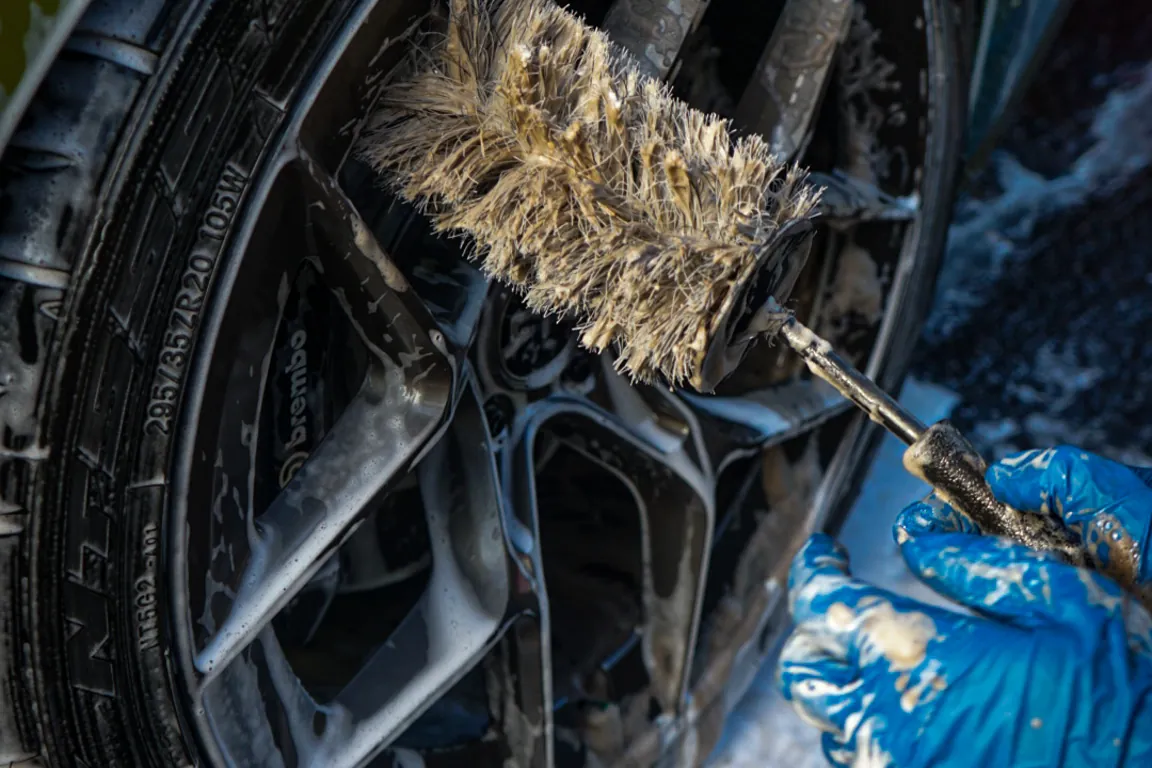
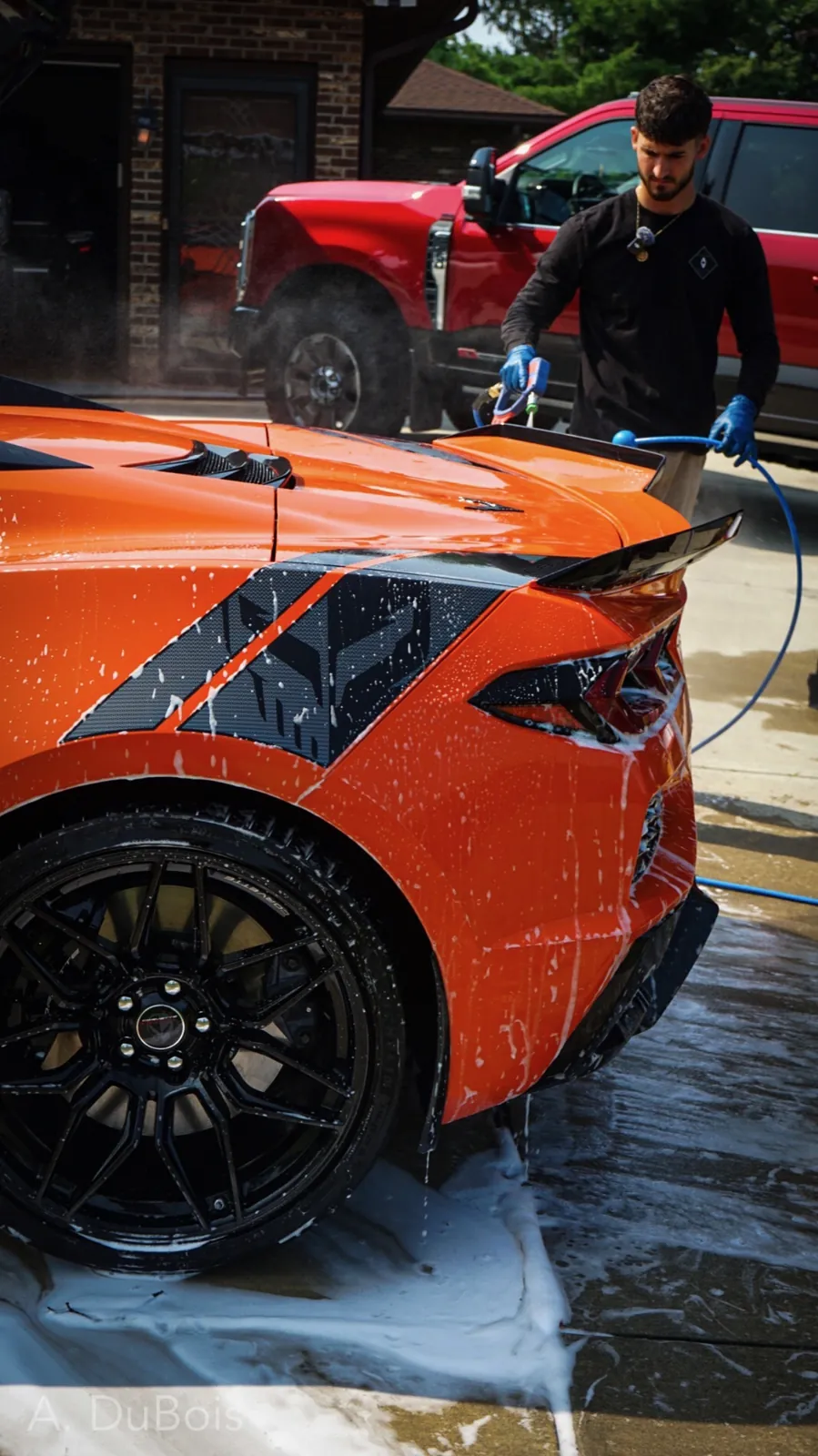
The wheels get rinsed, chemically treated with a thirty-second dwell, foamed, agitated, and rinsed again before we touch the paint, and then the car gets a pre-rinse, a bug and sap treatment, a foam and contact wash, and a second foam. After that the whole vehicle is clay-barred to pull bonded contamination out of the paint, which matters because polishing over embedded grit drags it across the panel.
Surface prep sprayed twice, before and after polishing
Every panel gets a dedicated surface-prep spray before polishing starts, and every panel gets it again after polishing finishes, so the coating bonds to a genuinely clean surface instead of to polishing oils. Doing it twice is deliberate, it is one of the two steps most commonly skipped, and it is part of why the price starts at $500 rather than at $250.
Trim and headlights taped off
Before any machine work, the trim pieces and headlights get taped so the polisher never contacts something it should not. That is the other step most commonly skipped. Polish staining on textured black trim is close to permanent, so the tape is cheaper than the apology.
Applied panel by panel, then levelled and checked for high spots
The coating goes on one panel at a time and gets levelled as it flashes, and then the whole vehicle gets inspected for high spots, the streaky ridges left where product was not levelled off in time. They are the most visible way a coating job goes wrong and they are hard to fix once cured, so the check is a named step rather than a glance. Windows, wheels, and tire dressing come last.
Twelve hours of cure in a dry area
The vehicle then sits for about 12 hours in a dry area while the coating cures, which is a scheduling fact worth knowing before you book. Because we are mobile, that cure can happen in your own garage, and where the car sits overnight is part of the conversation when we quote rather than a surprise on the day.
Why a $200 spray coating is a different product
Plenty of places will apply something they call a ceramic coating for a fraction of these numbers, and what is usually going on is a spray sealant, a genuinely useful product that we put on every exterior wash we do. It applies in minutes over a washed car with no decontamination, no correction, no taping, and no cure window. The price gap between the two is a labor gap rather than a margin gap.
The Service Price and the Operational Fees Are Two Different Numbers
Every figure on this page is a service price, which is what the detailing work itself costs. A small number of operational fees can sit on top of it, and rather than mention them at the door, we publish all of them.
Travel past about 40 minutes
Our core service area is Binghamton, Endicott, Vestal, Johnson City, Windsor, and Owego, and inside that radius there is no travel fee at all. A travel fee applies once the drive runs past about 40 minutes, which is what makes it possible for us to say yes to Syracuse, Ithaca, Elmira, and across the line into Montrose and Scranton.
Card and invoice payments carry an 8 percent processing surcharge
Card and invoice payments carry an 8 percent card processing surcharge, which covers what the card processor charges us and applies to those two payment methods only. Cash and check are fee-free, so if you would rather not pay it, you have a way not to. Finding out about a surcharge at the end of a $1,500 job is exactly the experience this page exists to prevent.
Everything else is on one page, in full
The rules and guidelines page carries the complete list: the travel fees with exact figures, the no-show and late-cancellation fee, the after-hours callout, the excessive-garbage fee, and the card surcharge above. Read it before you book, and if anything on it does not sit right, call (607) 341-0037 and ask.
Ceramic Coating Versus Wax
The short answer
A ceramic coating is a semi-permanent layer rated for roughly 2 to 3 years that has to go over prepped and usually corrected paint, while a wax or spray sealant is a sacrificial layer that applies in minutes and gets redone on a schedule, so the choice is really about how long you want to stop thinking about it.
What the word ceramic actually refers to
The "ceramic" in ceramic coating points at silica chemistry rather than at pottery. Silicon dioxide is a genuinely hard material, with a Mohs hardness of about 7 on a scale where diamond is 10, which is where the hardness language in coating marketing comes from and also where it gets stretched, because a coating is measured in microns and no film that thin is going to stop a shopping cart. What it can help with is the light marring, chemical etching, and UV exposure that dull a finish over a couple of years.
Coating and wax side by side
Ceramic coating compared with a wax or spray sealant
What you are comparing
Ceramic coating
Wax or spray sealant
Durability
Rated for roughly 2 to 3 years
Sacrificial by design, reapplied on a regular schedule
Prep required
Wash, clay-bar decontamination, surface prep twice, taping, and usually correction
A wash, and that is the whole prerequisite
Maintenance
No reapplication during the coating's life, and washing can get easier
Needs topping up to keep beading and gloss
Gloss
Designed to add gloss and water beading for the life of the coating
Warmth and shine that fade as the layer wears off
Cost per year
About $165 to $250 at the $500 starting price
No separate line item, a spray sealant goes on every exterior wash we do
Effort on your side
One appointment plus about a 12-hour cure in a dry area
Nothing to schedule, it comes with the detail
What a coating costs per year
Run the arithmetic and the answer changes shape. At the $500 starting price, spread across a coating rated for roughly 2 to 3 years, you are looking at somewhere between about $165 and $250 a year. The comparison people expect here is coating against wax on annual cost, except that comparison is awkward for us, because the spray sealant already goes on every exterior wash we do and never appears as its own line item.
Where a spray sealant is still the right call
If you wash your own car every couple of weeks and you enjoy doing it, a sealant on a regular schedule can keep a finish looking very good for very little money, and a coating is buying you convenience more than appearance. The coating earns its price on cars that sit outside, on daily drivers whose owners want no maintenance routine, and on paint that has just had several hundred dollars of correction put into it and deserves something protecting the result.
When a Ceramic Coating Is Not Worth It
Ceramic coating is the most profitable thing on our menu, so take the next five paragraphs with that in mind, and then notice that we wrote them anyway.
The car is going up for sale in the next few months
A coating does very little for resale value, because the next buyer cannot see it, cannot verify it, and will not pay for it. If the car is going on the market this season, a one-step correction at about $350 puts visible depth back into the paint for the photos and the walkaround, which is the part that moves a private sale.
The paint is damaged past what correction can address
Clear coat that has started to fail, deep scratches that catch a fingernail, sanded-through edges, or heavy oxidation on an older single-stage finish are all past the point where polishing helps, and a coating over any of them locks the damage in for two or three years. That is a body shop conversation, and we will tell you so on the walkaround rather than after the deposit.
The lease ends before the coating does
Paying for two to three years of protection on a vehicle you hand back in fourteen months is buying something you will not use. Lease returns are graded on damage and wear rather than on gloss, so a full detail before the inspection is usually the spend that pays for itself.
The budget goes further on correction alone
If what matters to you is how the car looks on Saturday, correction is doing almost all of that work and the coating is protecting it. When a budget only stretches to one, take the correction and add the coating next season rather than splitting the money and getting a thin version of both.
Nobody is going to wash it
A coating is not a substitute for washing, and on a car that gets washed twice a year the surface will still hold road film, bird etching, and water spots. It can make each of those washes easier, though it cannot do the wash for you. If the answer is that the car will not get maintained, the money is better spent on a monthly plan or on a full detail twice a year.
Correction First, Then Coating, and Why That Order Costs Less
The order of operations is the part most people get wrong when they price this out, and getting it right is worth real money on the quote.
Whatever is under the coating stays under it
A coating is transparent and thin, so it copies the surface underneath rather than hiding it, which means swirl marks, water spots, and dull patches stay visible and now sit under a layer rated for two to three years. Correcting first is what makes the coating worth applying, and correcting afterwards means polishing the coating off and starting over.
How we tell one stage from two
We look at the paint under a light on the walkaround, which is the only reliable way to tell how deep the defects go, and then we tell you which stage the car needs rather than which stage sells better. Plenty of cars get quoted at one stage after arriving expecting two. Call (607) 341-0037 or send photos through the quote form and we can usually give you a range before anyone drives anywhere.
Where to read the rest
The full 20-step sequence and what the coating is and is not designed to do sit on the mobile ceramic coating page, and the machine-work side, one stage versus two, is on the paint correction page. Both of them link back here for the numbers, so nothing is hiding behind a form.
Very quick and does a great job. Good prices that aren't crazy like some. If you want a interior and exterior, the package price is unbeatable for the quality of work that's done.
JJaydenGoogle Review
Questions We Get About Ceramic Coating Cost
How much does ceramic coating cost?
A ceramic coating starts at $500 with us, using a coating rated for roughly 2 to 3 years, and the price moves with the vehicle's size, the paint's condition, and whether correction is done first. Correction alone starts at about $350 for one stage and about $650 for two, and bundled with a coating it starts at about $1,000 or about $1,500. Those are starting prices for a normal vehicle rather than quotes, and each is a service price before the operational fees published on our rules page.
Is ceramic coating worth it?
It is worth it on a vehicle you plan to keep for at least the life of the coating, that spends time outside, and whose paint is either in good shape or about to be corrected. It is not worth it on a car you are selling this season, on a lease you hand back next year, on paint damaged past what polishing can address, or on a vehicle nobody is going to wash. We turn down coating work on those cars most months.
How long does a ceramic coating last?
The coating we apply is rated for roughly 2 to 3 years, and how close it gets to the top of that range comes down to how the vehicle is washed and stored.
Is ceramic coating better than wax?
For durability, yes by a wide margin, since a coating is rated in years while a wax or spray sealant is sacrificial and gets reapplied through the season. For appearance on a well-maintained car the gap is smaller than the price difference suggests, and some people prefer the warmth a carnauba wax gives a dark finish. The real difference you are buying is time.
Do I need paint correction before a ceramic coating?
Not always, though usually. New paint or a well-kept car with no visible defects under a light can be coated directly, and a daily driver with swirl marks needs correction first, because the coating is transparent and locks in whatever is underneath it. We check the paint under a light on the walkaround and tell you which stage it needs, including when the answer is none.
Why do ceramic coating prices vary so much?
Because the phrase covers two different products. A quote in the low hundreds is usually a spray sealant applied over a washed car, which takes minutes and lasts a fraction as long, and a quote in the high hundreds or the low thousands includes clay-bar decontamination, machine correction, taping, two passes of surface prep, panel-by-panel application, a high-spot check, and a cure window. Vehicle size and paint condition move the number too, though the biggest spread on any two quotes for the same car is almost always how much preparation is included. Ask a detailer what happens between the wash and the coating going on, and the answer tells you which product you are being sold.
Does the ceramic coating price include paint correction?
No. The $500 starting price is the coating itself, applied over prepped paint. Correction is priced separately at about $350 for one stage and about $650 for two, and bundling them is cheaper than booking apart, which is where the roughly $1,000 and roughly $1,500 figures come from.
Get Your Number
If you came here asking what a ceramic coating costs, the number starts at $500 and the next step is a look at your actual paint. We quote from photos or from a walkaround rather than from a menu, and we will tell you when the answer is that you do not need a coating yet.
What we need from you
Year, make, and model, whether the vehicle lives inside or outside, and four photos taken in daylight: one of each side, one down the hood, and one close to a panel where you can see the swirls. That is enough to put a real range on it before anybody drives anywhere.
What happens next
We come back with a range and what would move it, and if correction changes that range we say which stage and why. Booking runs through the same page, Monday through Friday, 9:00 AM to 5:00 PM across Broome County.