
Mobile Ceramic Coating in Binghamton, Applied at Your Home or Garage

A 20-step coating, applied at your home or garage, and checked panel by panel before we leave. Whatever is under the coating stays under it for years, which is why the prep is most of the job.

Request a Coating Quote
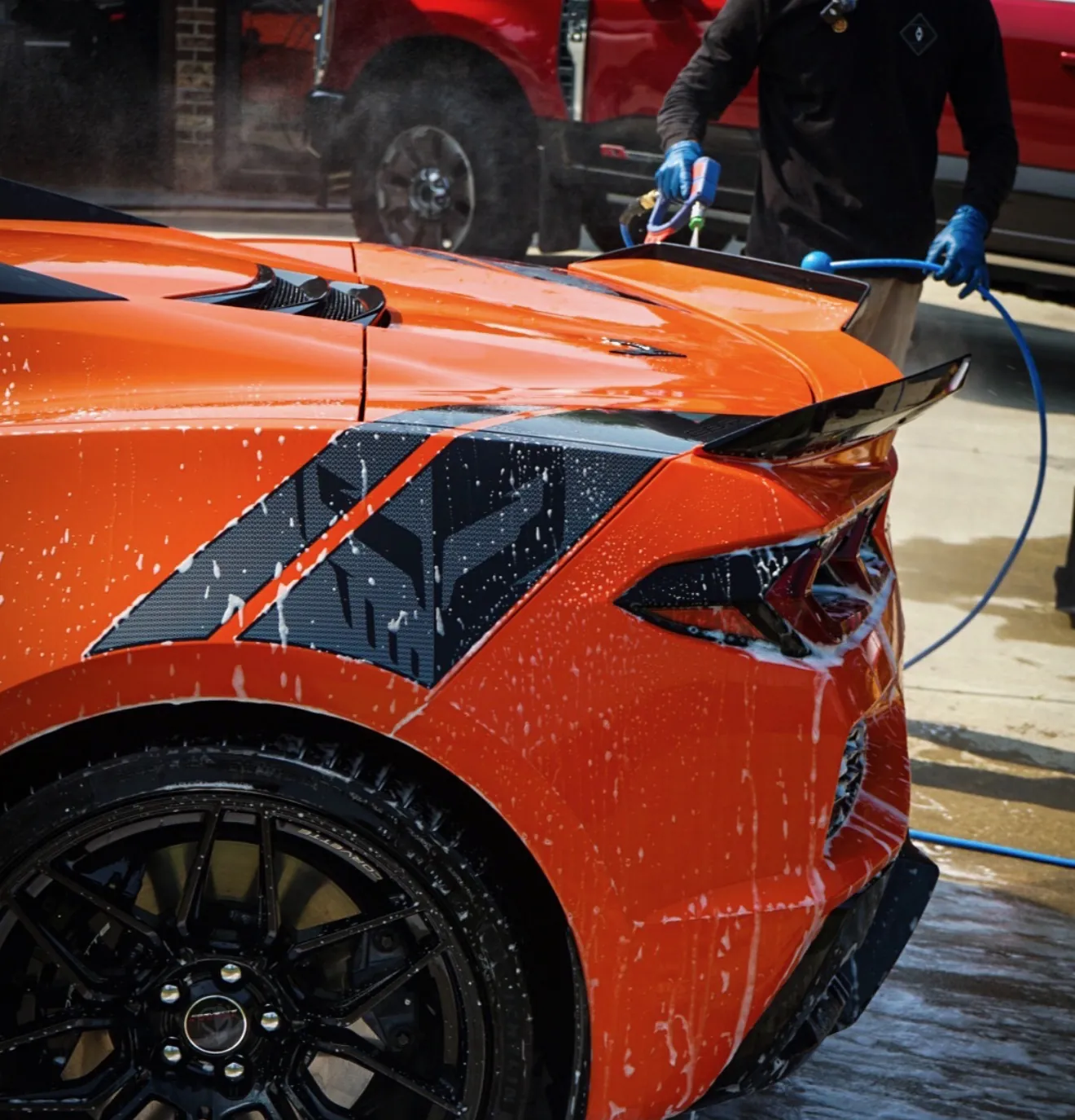
Mobile ceramic coating near Binghamton, NY: the Auto Aesthetics crew working on an orange Corvette in a customer driveway
Rated 4.9 across 50+ Google reviews
A documented 20-step coating process
Fully insured, based in Endicott, NY
We come to you, Monday through Saturday

What a Ceramic Coating Actually Buys You

A coating bonds to the clear coat, and a wax sits on top of it

Most people asking about a coating have already tried wax, so the difference is worth understanding before anyone spends five hundred dollars. A ceramic coating is a liquid polymer built largely around silicon dioxide, the same compound that makes up sand and quartz, and it cures into a hard, clear layer bonded to your clear coat rather than resting on it. That bond is what produces the gloss and the water beading people associate with a coated car, and it is also what makes washing easier, since dirt has a harder time keying into a slick surface. Wax still works, and it is cheaper. It also comes off in a couple of months.

The coating we use is rated for roughly 2 to 3 years

What you actually get out of it depends on things nobody can honestly promise in advance, like whether the car lives outside through a Broome County winter, how often it gets washed, and what it gets washed with. A coated car run through an automatic brush tunnel every other week may lose its slickness well before the rating says it should, while a garaged car washed by hand can hold its gloss right through the window. We would rather hand you the rating and the variables than a number that sounds better in a sales pitch.

Why mobile changes the logistics and not the standard

Working out of a van means the sequence has to be tighter rather than looser, because there is no shop bay to fall back on if a step gets rushed. Every job carries the same water, the same chemicals, the same clay, the same tape, and the same 20-step order, run in the same sequence whether the car is sitting in a driveway in Vestal or a garage in Johnson City. The only real difference is where the vehicle sits for its 12-hour cure, and that is a scheduling question we settle with you before the day rather than on the day.

Foam contact wash during ceramic coating prep in Binghamton, NY

The First 12 Steps Are All Decontamination and Prep

Steps 1 to 4

Wheels get cleaned before anything touches the paint

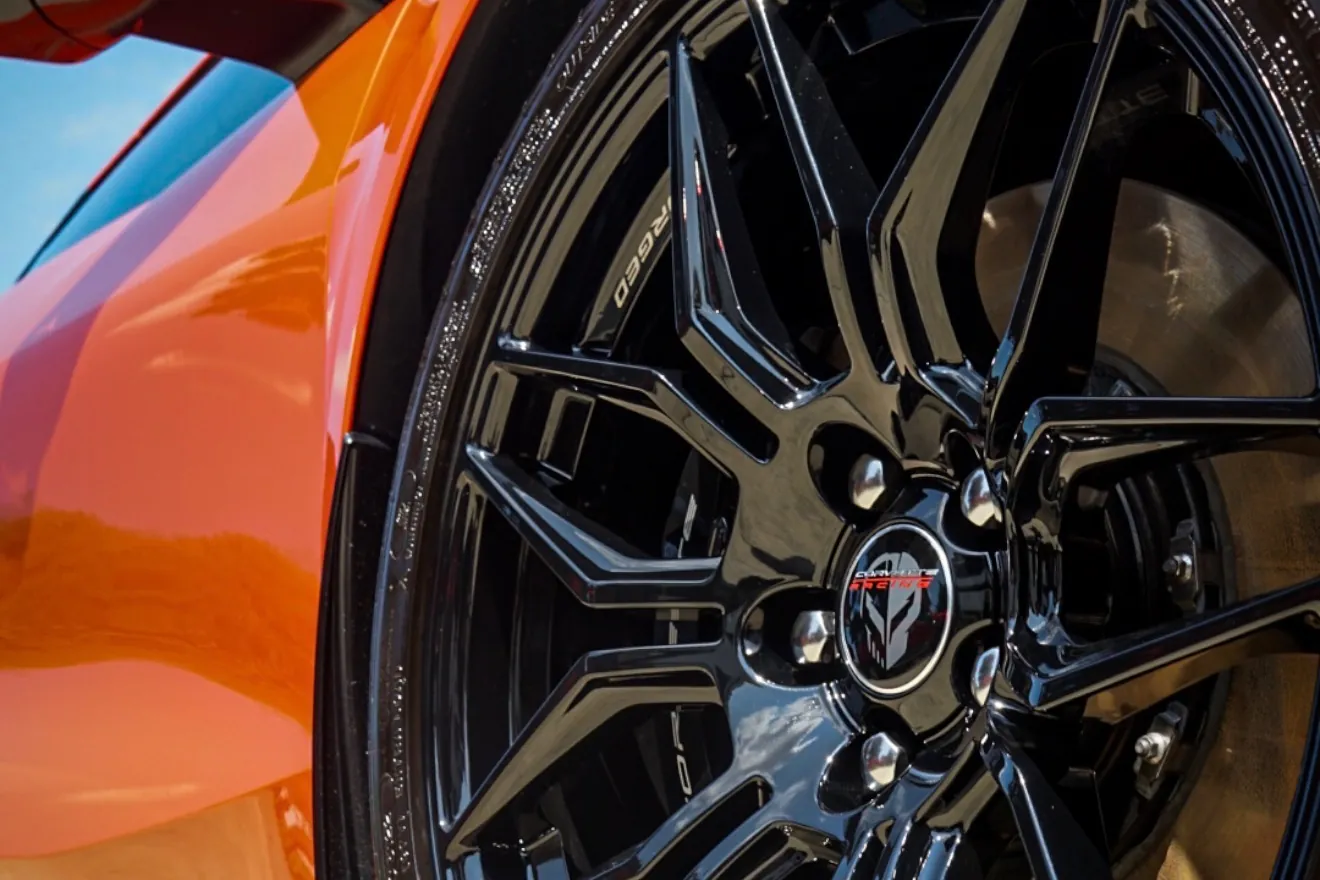
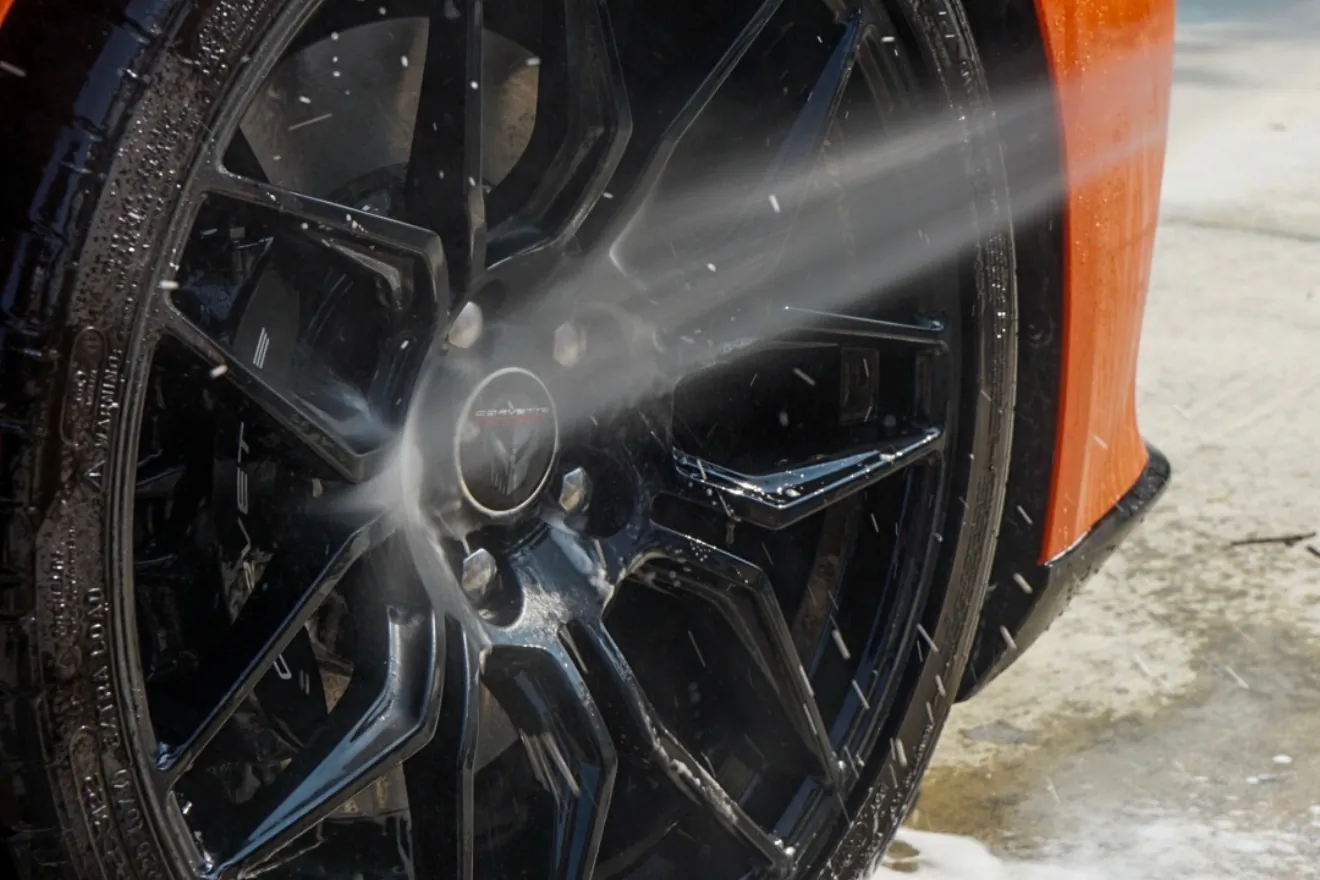
Wheels come first for a practical reason, since wheel cleaner and brake dust flung onto paint you have already washed just means washing it twice. We pre-rinse the wheels, spray the chemical and let it dwell about 30 seconds so it has time to break down brake dust instead of being scrubbed off while it is still wet, then foam and agitate the barrels, faces, lug nuts, tires and wheel wells before rinsing all of it back off.
Steps 5 to 8

Two rounds of foam and a contact wash before the paint is called clean

With the wheels done, the car gets a pre-rinse, then bug remover sprayed and scrubbed across the front end, the mirrors, and anywhere sap or road film has baked itself on. From there it is foamed and given a contact wash, rinsed, and foamed a second time. Two rounds of foam on a car that is about to be coated sounds like overkill until you remember that anything left in the paint at this stage is something the coating seals in for years.

Step 9

The clay bar, because a wash does not decontaminate paint

Washing removes what is sitting on the paint, and clay removes what is stuck in it: rail dust, industrial fallout, overspray, and the fine grit that makes a freshly washed panel still feel like fine sandpaper when you run your fingertips over it through a plastic bag. We clay the whole vehicle, including the panels nobody inspects, and the payoff shows up twice, first as a surface the polish can actually work on and then as a surface the coating can actually bond to.

Skip the clay and the coating still goes on. It goes on over contamination, and every one of those embedded particles stays locked under the coating for as long as the coating lasts, which is the part that turns a shortcut into a two-year problem.

Steps 10 to 12

Dry, prep spray every panel, then tape off trim and headlights

Once the car is rinsed and dried, every panel gets a surface prep spray before a polisher touches it. Then comes the taping, and this is one of the two things the crew will tell you most detailers skip. Trim pieces, plastics, badges and headlights get taped off so the polisher never makes contact with a surface it was never meant to touch, because polish burned into textured trim or a headlight lens is not something you buff back out. Tape is cheap. Replacing a trim panel is not.

Polish, Prep a Second Time, Coat, Then Cure

Step 13

A one-step or two-step polish, decided by what the paint needs

The polish stage is where the finish gets set, and it varies more from car to car than anything else in the job. A one-step is designed to remove roughly 60 to 70 percent of swirl marks and suits paint that reads dull rather than damaged, while a two-step cuts first and then refines, which is the call on paint carrying deeper defects. We walk the car with you under direct light before deciding, and if the second stage is not going to buy you enough to be worth the money, we say so. The full breakdown of both levels lives on our paint correction page.

Step 14

The second surface prep stage, the step others won't do

After polishing, every panel gets surface prep sprayed a second time. Polishing leaves oils and residue behind, and those oils are very good at making paint look flawless in a driveway and very bad at letting a coating bond to it. Doing it a second time is the difference between a coating that grabs the clear coat and one that sits on a film of polishing oil and starts failing early. It costs us about twenty minutes and it is the cheapest insurance on the entire job.

Steps 15 to 18

The coating goes on panel by panel, then gets leveled and checked

Coating gets applied one panel at a time in a controlled cross-hatch, so no section sits longer than it should before it is leveled off. Tire shine goes on, the glass gets cleaned, and then the crew walks the whole car hunting for high spots, which are the streaky patches left where coating was not leveled evenly. High spots take seconds to correct in the first few minutes and become a real problem once cured, which is exactly why the check happens before anyone starts packing the van.

Steps 19 and 20

12 hours of cure in a dry area, then we are finished

The coating needs roughly 12 hours in a dry area to cure, and that is the one part of this job that needs something from you. A garage is ideal, a carport works, and any covered space out of rain and heavy dew point conditions is usually enough. We schedule around that window instead of hoping the weather cooperates, and when the forecast will not give us a dry stretch, we move the appointment rather than coat a car we cannot cure properly.

The Crew Explains What Gets Missed, on Camera

Behind the wheels, in their own words

The clip below was filmed on an orange Corvette, and it is a few minutes of the crew pointing at the specific places a wheel gets called clean before it actually is: the back of the spoke, the inside of the barrel, the lip you only see if you crouch. None of it is dramatic. It is the reason a coated wheel still reads as coated six months later.

Crew walkthrough video coming here soon

Why we would rather show you than tell you

Nearly every detailer says the same things about care and quality, so the only way to separate them is to look at the work and ask specific questions. Ask whoever is quoting your coating to describe their prep sequence out loud: do they clay the whole car, do they prep-spray before and after polishing, do they tape the headlights, and how long do they need the car to cure. Then get the answer in writing before you put money down, which is standard consumer advice for any vehicle service and costs you nothing to insist on.

Does a Coating Need a Shop?

What the shop argument gets right

You will hear that a ceramic coating has to be applied indoors in a controlled shop environment, and the concern underneath that claim is legitimate. Wind carries dust onto a freshly prepped panel, rain ruins a cure, direct sun makes coating flash faster than it can be leveled, and a swing in temperature changes how the product behaves on the panel. Those variables are real, and a detailer who waves them off is telling you something about how carefully they work.

What actually controls the result

The variables that decide a coating job are controllable outside a shop, and there are four of them.

  • The clay bar: the paint genuinely decontaminated, not just washed
  • The prep spray: every panel prepped before AND after polishing
  • The taping: trim and headlights taped off before the polisher runs
  • The cure: a full 12 hours in a dry area

Your garage covers the cure, and we perform the clay, the double prep spray, and the taping the same way on every job, which is why the process is written down instead of remembered.

Where we will turn a coating down

We will not coat a car in the rain, in high wind, in direct midday sun on a dark hood, or at a location with no dry space for the cure. When one of those is the reality, we reschedule or arrange a drop-off, and we would much rather have that conversation before you pay than explain a failed coating afterward.

Whatever Is Under the Coating Stays Under It

Swirls do not get hidden, they get sealed in

A ceramic coating is transparent and it is durable, which is excellent news for a corrected finish and bad news for a swirled one. Swirl marks, etching and light scratches do not get filled or hidden by the coating, they get sealed under a layer designed to hold for two to three years. That is why we recommend you correct the paint first on nearly every coating we quote, and why we would rather talk a customer into correction than take the coating money and hand back a permanently locked-in problem.

How we decide how much correction the paint needs

Paint gets assessed in direct light with you standing there, because swirls that are invisible in a shaded driveway light up like a spiderweb the moment the sun hits the right angle. Age, color and wash history all move the answer. Dark paint shows everything and generally needs more work, while a hand-washed three-year-old daily driver sometimes needs far less than its owner expects.

When we tell you to skip the correction

Correction is not automatic, and there are cars we advise against it on. A lease return heading back to the dealer, a vehicle being sold in the next few months, or genuinely healthy paint on a newer car that has been cared for are all cases where the money is better spent elsewhere or not at all. That answer costs us the bigger ticket sometimes, and it is still the right one, because a coating over sound paint is a legitimate job on its own.

Deep gloss and water beading on a ceramic coated Corvette in Broome County, NY

What a Ceramic Coating Costs Here

Where the number starts

Coating starts at $500, and where a given vehicle lands above that comes down to its size, the condition of the paint, and how much correction you decide to run first. Where prices start and the four things that move the number are on the ceramic coating cost page, rather than a menu that pretends every vehicle is the same job. Travel past roughly 40 minutes and the card processing surcharge are both listed on our rules and guidelines page, so nothing turns up as a surprise on the invoice.

What moves the number on your car

Size comes first, because a three-row SUV is simply more panel than a coupe and the coating, the clay and the polishing time all scale with it. Condition comes second, since paint that needs a two-step before it is worth coating carries a full extra stage of labor. The third factor is you: whether you want correction bundled in, and how far you want it taken. The fourth is where the car is, which matters only past the travel threshold on the rules page.

How the day actually runs

A coating is not a two-hour appointment. Depending on the correction stage, expect the crew on site for most of a working day, and expect the car to stay parked in its dry space for about 12 hours after that. Most customers book it around a weekend so the car is not needed mid-cure, and we confirm the whole timeline with you when we quote.

Where We Bring Mobile Ceramic Coating

The six towns we cover on a normal week

Binghamton, Endicott, Vestal, Johnson City, Windsor and Owego are the core, and most weeks the schedule never leaves them. If you are anywhere in Broome County, we are probably already working within a few miles of you this week.

Past about 40 minutes from Endicott

We also travel to Syracuse, Ithaca and Elmira, and south into Montrose and Scranton in Pennsylvania. The drive adds $60 beyond roughly 40 minutes from our Endicott home base, and $120 out around two hours. The full fee list is on the rules and guidelines page.

What we need from you on the day

Access to the vehicle, somewhere reasonable to park it while the work happens, and a dry covered space for the 12-hour cure. Water and power help but are not required, since the van carries both. If you are coating a car at a workplace or an apartment complex, the cure space is the piece to sort out in advance, and we will talk it through with you rather than turning up and improvising.

Proof You Can Check Before We Leave

Rinsing a wheel during ceramic coating prep on a Corvette near Binghamton, NY

The three checks that close every coating job

Every coating ends with the same three checks: paint inspected for high spots, windows confirmed spotless, wheels confirmed spotless. Those are the coating-specific ones, and they sit on top of the habits that run on every job we do, which means we also check under the seats, behind the mirrors, the window sills, the gas cap and the door jambs. Walk out and check any of them yourself. That is the point of naming them.

Rated 4.9 across 50+ Google reviews

Three years of full-time work in Broome County has produced a 4.9 rating across 50+ Google reviews, most of it built on referrals rather than advertising.

Very professional, trustworthy, and friendly! Bryson did a matte ceramic coating and interior detail for us on a very expensive Mercedes AMG 63 and he was very attentive to make sure everything was absolutely perfect. It's not easy to trust a stranger with your car, but as soon as I met Bryson I was confident that we're in good hands.

Executive Auto WrapsGoogle Review

I've got satin paint on my car and though it's not common, Bryson and his team make it look better than when I took delivery of the car. They are incredible detailers. They make my car look showroom ready everytime and it lasts too.

Anar D.Google Review

Always does insanely great work. Very detail-oriented. You can tell he invests into his craft to give his clientele the best service possible. Highly recommend!

Colin W.Google Review

Fully insured, with the same crew on your driveway

The business is fully insured, and the crew that shows up is the crew that has been doing this work together, in uniform, on a set schedule. That matters more on a coating than on a wash, because a coating is a full day of decisions made about your paint while you are inside the house, and your only real protection is that the people making them work the same way every time.

Ceramic Coating Questions We Get Asked Most

How long does a ceramic coating last?

The coating we use is rated for roughly 2 to 3 years. How much of that you actually see depends on where the car sleeps, how it gets washed, and whether it goes through automatic brush tunnels, which are hard on any coating. A garaged car washed by hand tends to hold gloss and beading through the whole rating, and a car parked outside year-round in Broome County weather may start losing slickness earlier.

Do I need paint correction before a ceramic coating?

Usually, yes, because a coating seals in whatever finish it goes over and holds it there for years. If the paint carries swirls, etching or light scratches, those get locked under the coating rather than covered by it. Newer cars with genuinely healthy paint are the exception and can be coated as they are. We assess the paint in direct light with you before quoting, and the difference between a one-step and two-step correction is broken down on the correction page.

Can a ceramic coating be applied outdoors or in the sun?

Outdoors, yes. In direct sun, no, and the two get conflated constantly.

Direct sun heats the panel and makes the coating flash off faster than it can be leveled, which is how high spots happen, so we work in shade, in a garage, or in cooler parts of the day. What matters for the finished result is the application conditions and the cure area rather than whether there is a roof involved: clean decontaminated paint, panels prepped before and after polishing, trim taped, and about 12 hours in a dry area afterward. The claim that a coating must be applied inside a shop gets used to steer people toward shop-based detailers, and it is worth pushing back on with a specific question about which condition is actually being controlled.

Do you come to my house or garage, or do I drop the car off?

We come to you, which is the whole model. Home driveways, garages and workplaces all work for a coating booking, provided there is a dry covered space for the 12-hour cure afterward. If there is not, a drop-off can be arranged instead, so ask when you book rather than assuming either way.

What does a ceramic coating cost?

It starts at $500 and moves with vehicle size, paint condition and how much correction is done first. Where prices start and the four things that move it are on the ceramic coating cost page.

What do you clean that other detailers skip?

On a coating specifically, the two things the crew names are the surface prep spray run on every panel twice, before and after polishing, and taping off trim pieces and headlights so the polisher never touches them. On every job, we check under all the seats, behind the wheels and mirrors, the window sills, the gas cap and the door jambs. Those are checkable, which is the point of listing them, so check them.

How long does the appointment take, and when can I drive the car?

Plan for most of a working day on site if correction is included, and about 12 hours of cure in a dry space after we leave before the car goes back into normal use. We give you the specific timeline when we quote, since it depends on the vehicle and the correction stage.

Ready to Book a Coating in Broome County

Send us the vehicle and we will quote it properly

Tell us the year, make and model, roughly how the paint looks in the sun, and where the car would sit for its 12-hour cure. That is enough to price the job right the first time instead of throwing a number at you and adjusting it in the driveway. Booking runs through the contact page, and we answer Monday through Saturday, 8:00 AM to 5:00 PM.

Get a Coating Quote

If you would rather talk it through first

Some coating decisions are easier on the phone, particularly the correction question, and we would rather spend ten minutes on that call than quote the wrong stage. Call (607) 341-0037 during business hours, or email [email protected] if that is easier.

(607) 341-0037