
Mobile Paint Correction in Binghamton and Broome County
We machine polish swirls and oxidation out of your clear coat at your home or your workplace, on the same 14-step order every time, checked before we leave.
Get a Paint Correction Quote
What Swirl Marks Actually Are
The damage sits inside the clear coat, not on top of it
Most people asking about paint correction are standing next to their car in a parking lot, tilting their head to catch the light, wondering why a vehicle they wash every other weekend looks like somebody went at it with a scouring pad. Those fine circular scratches are real grooves cut into the clear coat, and they get there the ordinary way: a wash mitt dragging trapped grit, an automatic car wash, a dry towel on a dusty hood. Soap cannot lift a groove out of a surface.
Why your paint looks worst under direct sun and gas station lights
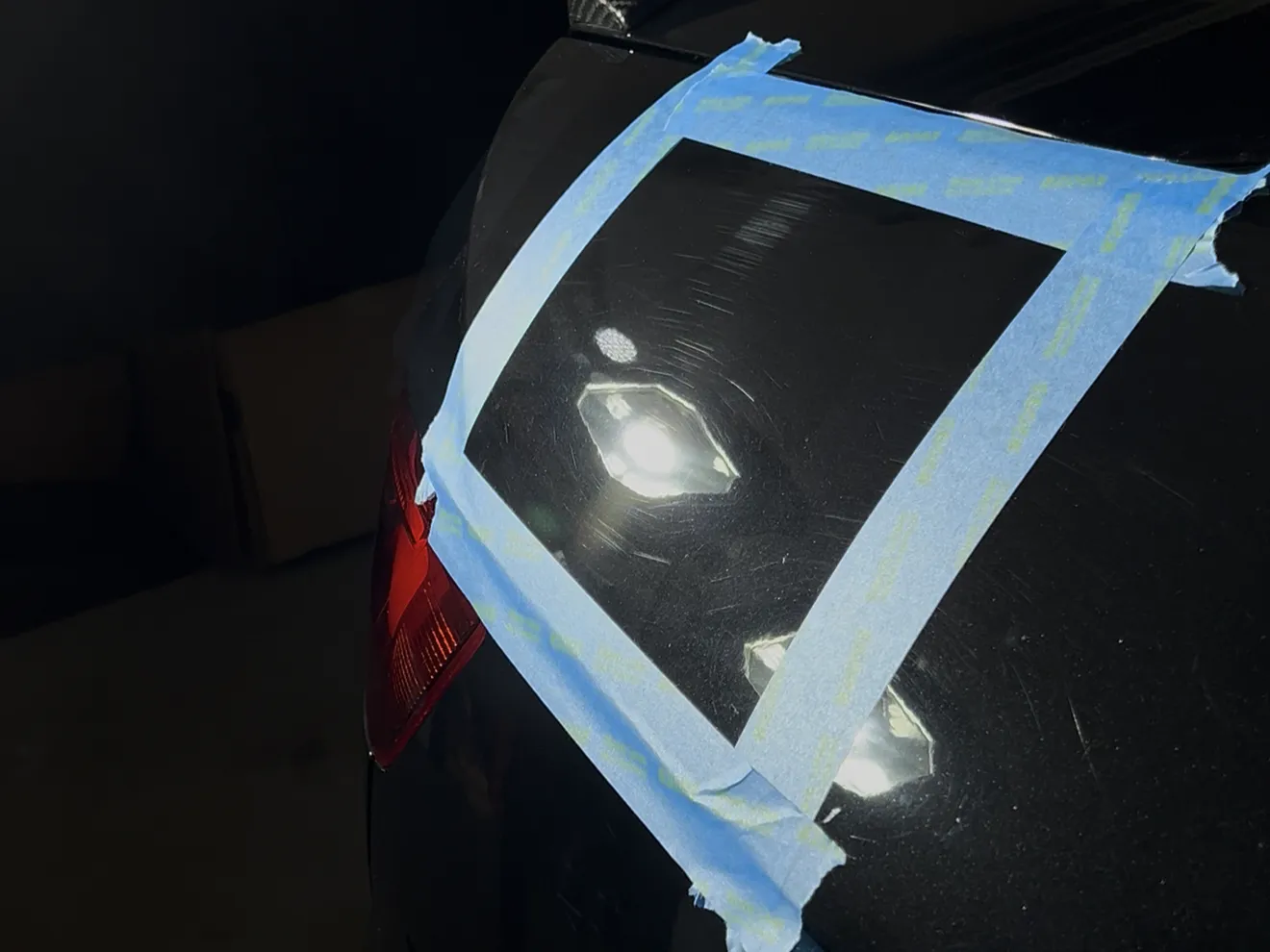
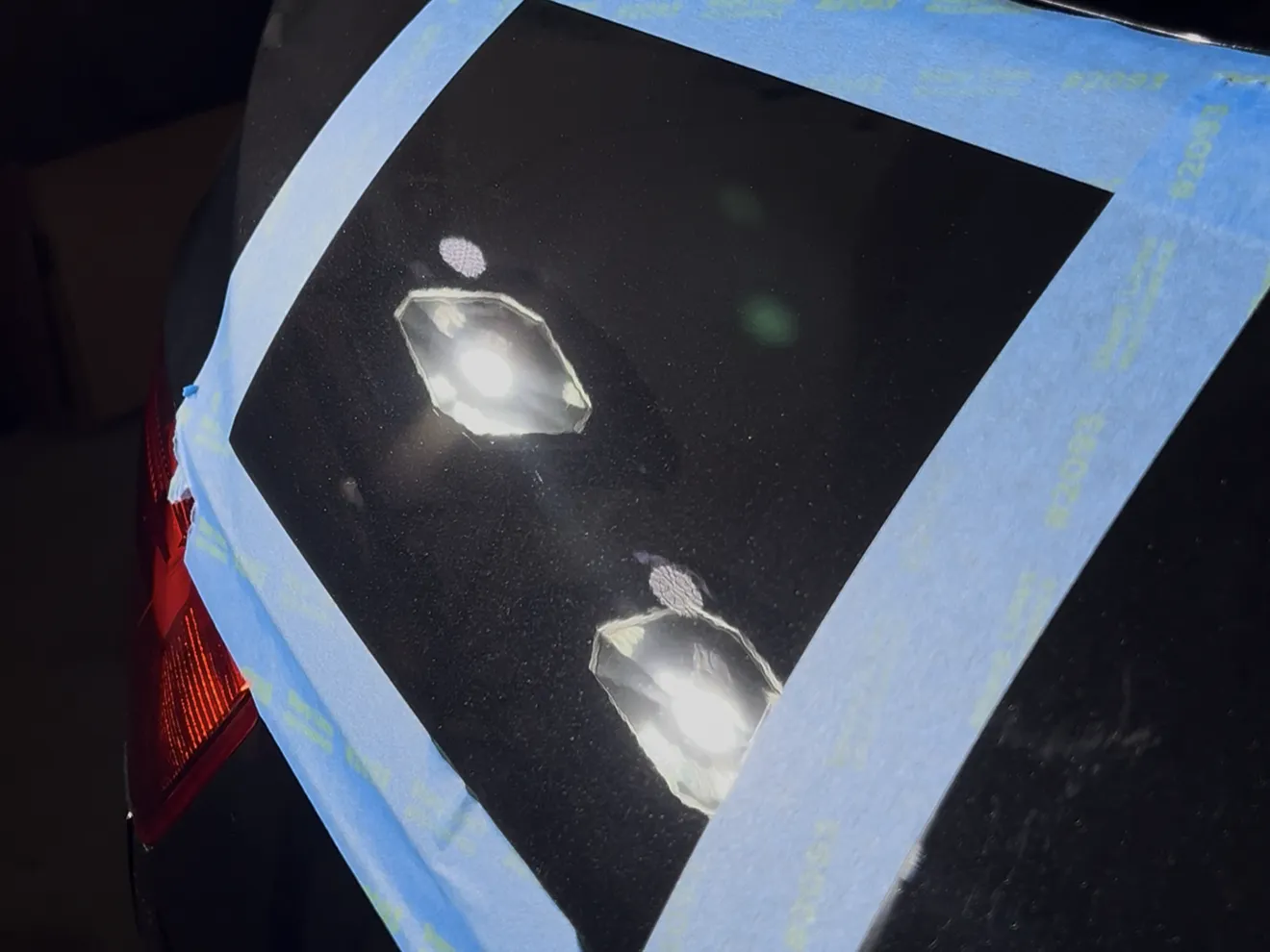
Swirls are invisible under an overcast sky and brutal under a single point of light, because a level surface bounces light back in one direction while a scratched one scatters it in a thousand. That is why a car can look fine in your garage on Tuesday and look wrecked in a parking lot on Saturday. Detailers use the same physics as a tool, holding a light across a panel at a low angle so the defects stay visible while the machine is in hand.
Buffing, polishing, swirl removal: four names for one job
Swirl mark removal, paint enhancement, buffing, and machine polishing are four names for one physical process, and the quotes you get back differ on how many machine stages the work includes and whether anyone prepped the paint first. Oxidation lands in the same bucket for a different reason: sustained UV exposure breaks down the resin in the clear coat until the surface goes chalky, which is why a red car parked outside for ten Southern Tier summers fades in a way a garaged one does not. The EPA's sun safety resources cover how UV intensity shifts by season, and the same exposure that burns skin degrades a clear coat.
How Do You Know the Correction Was Real?
You cannot verify a correction the way you can verify a clean interior
An interior detail proves itself. You open the door, run a finger along a vent, look under the seat, and you know inside ten seconds whether you got what you paid for. Correction does not work that way, because paint always looks better right after any machine touches it, and the gap between real correction and a cover-up takes weeks to show.
What a rushed correction looks like six weeks later
There are two ways to make paint look corrected without correcting it, and both are common enough that you should know the names. The first is glaze and filler: a product loaded with oils that sits down inside the scratches, hides them under a wet-looking gloss, and washes back out over the next month or two. The second is one fast pass with an aggressive pad and no finishing stage, which leaves holograms behind, a faint buffing haze that shows up as straight parallel lines under direct sun. Both leave a customer paying premium money for a result that quietly expires.
How we make the work checkable instead of asking you to trust us
Ask us to show you a panel under a light before we start and again after the first section is done, so you see the difference on your own vehicle rather than in a photo of somebody else's. Ask what happens on the second wash, since a real correction survives it and a filler does not. And ask which stages are included, because a quote that will not tell you which one you are buying is telling you something.
One Step or Two Step Paint Correction?
A one step correction: one machine stage, and most of the swirls
A one step correction is a single pass across every painted panel with one pad and one polish, chosen to cut deep enough to remove the defects and finish clean enough to leave no haze. It is designed to remove roughly 60 to 70 percent of the swirl marks on a typical daily driver, and it includes a full exterior detail, so the car is decontaminated and washed properly first. For most vehicles around here it is the honest recommendation, because it delivers the obvious improvement without removing more clear coat than the paint can afford.
A two step correction: cut, then polish, then seal
A two step correction runs the whole vehicle twice. The first stage uses a more aggressive pad and compound to cut deeper defects out of the clear coat, which levels the surface but leaves its own micro-marring behind, and the second stage refines that surface with a finishing polish until the gloss comes back clean. A sealant goes on at the end. Roughly double the machine time, and the right call on heavier scratching or on a vehicle heading into a ceramic coating.
How we decide which one your paint actually needs
The one step or two step question comes up on almost every quote call, and the answer is a property of your paint rather than of our menu. Quotes vary mostly on three things we check in person or in photographs shot under a hard light: how deep the scratches run, how much clear coat is left, and whether the panels have been polished before. A car buffed twice already gets a more conservative recommendation, not a more expensive one.
What it costs, and what moves the number
A one step paint correction starts from about $350 and includes the exterior detail, with the number moving up from there based on the size of the vehicle and how much correction the paint actually needs. A two step costs more, because it is a second full machine pass across every panel. Rather than publish a menu that would be wrong for half the vehicles that read it, we put the honest starting floors and the four variables that move a quote on the correction and coating cost page. Travel, card processing, and cancellation are written out plainly on our rules and guidelines page, so nothing lands on an invoice you have not already read.
The process behind the price
A price is worth exactly what the evidence beside it is worth, so here is the evidence. Before a polisher touches your paint, the car goes through the full 14 step exterior process: the wheels get a chemical that dwells a measured 30 seconds before anything is agitated, and the paint gets two separate rounds of foam, a bug scrub and then a contact wash, so grit is lifted off rather than dragged across the finish. That prep is the difference between polishing paint and grinding dirt into it. Before we leave, we check the wheels for brake dust, the fender wells, every window for streaks, the gas cap, and the door jambs. That standard is what 4.9 across 50+ Google reviews is measuring.
Before
After
The 14 Step Exterior Process Every Correction Starts With
Wheels first, and why the chemical dwells for 30 seconds
Wheels come first on every vehicle, before a drop of water touches the paint, because wheel cleaner and brake dust thrown off a pressure washer land on panels you have already cleaned. The wheels get rinsed, then a chemical goes on and sits for a measured 30 seconds, because the product needs contact time to break down bonded brake dust before agitation. From there it is a pH neutral foam and hands-on agitation through the wells, barrels, tires, faces, and lug nuts.
Two foams, not one
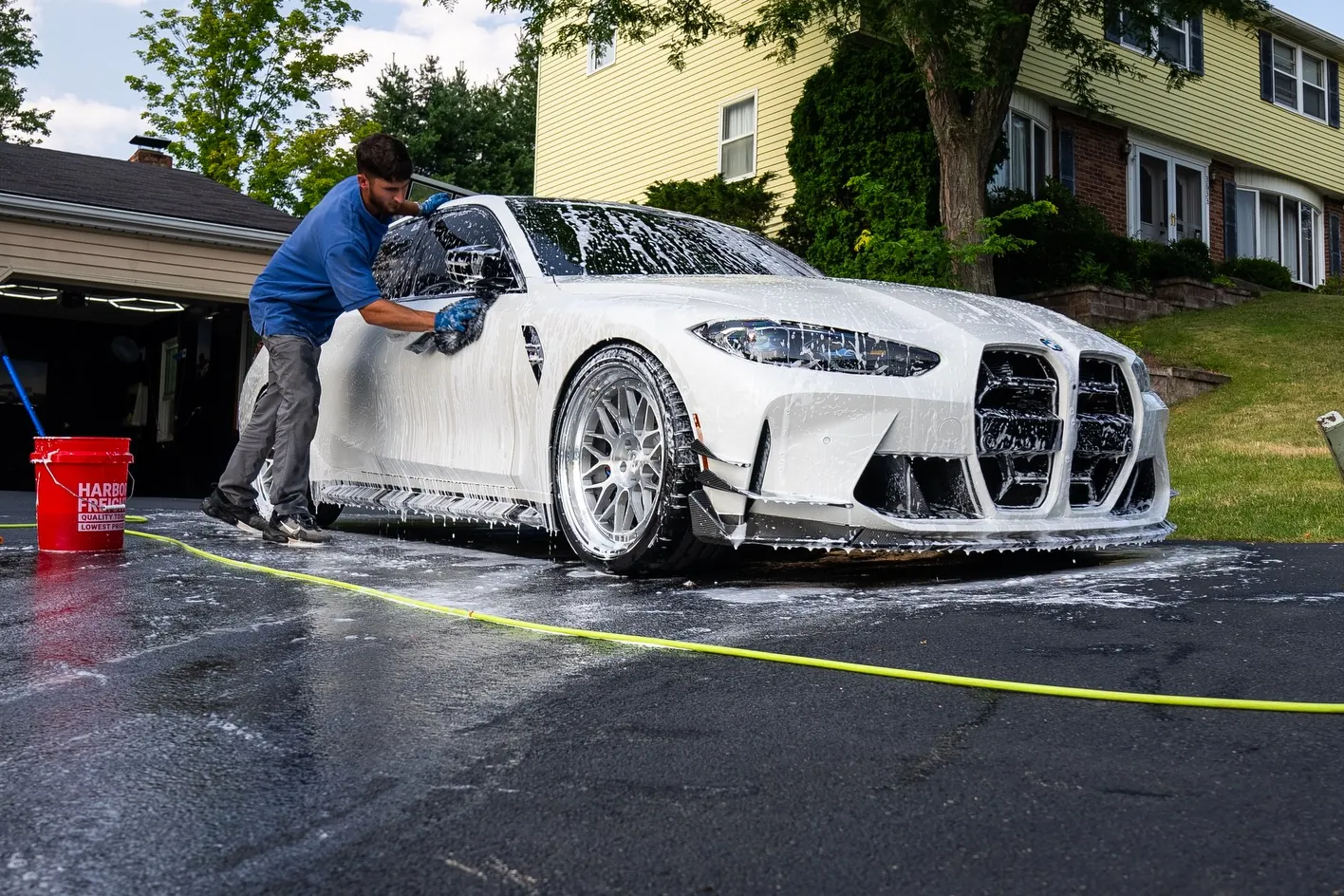
The paint gets two separate rounds of foam, and this is the single most important detail for anyone worried about a rushed job. The first foam goes on with a bug scrub on the front end, then gets rinsed off along with everything it lifted. Only then does the second foam go on for the contact wash, so the mitt moves across a surface that has already had its abrasive material floated off. A single-foam wash drags whatever was left behind straight across the clear coat, which is the exact mechanism that creates swirls.
The 14 steps, in the order we run them
- Rinse the wheels with water
- Apply wheel chemical and let it dwell for 30 seconds
- Rinse the wheels, foam with pH neutral soap, begin agitating
- Clean the wheel wells, barrels, tires, wheel faces, and lug nuts
- Rinse again
- Degrease and apply bug remover on any applicable spots
- Pre-rinse the car with water
- Foam the car and bug scrub the applicable spots
- Rinse off the bug residue
- Foam the car a second time and contact wash
- Rinse and apply ceramic spray sealant
- Rinse and dry with a blower and drying towels
- Check and dry the wheels, confirming no brake dust is left
- Tire shine
That list is the written order we have run for three years. It does not change based on how busy the day is. On a correction job the machine work begins after step 12, since a sealant goes on after polishing rather than before.
The check we run before we leave your driveway
Every job ends with a specific list rather than a walk-around glance, and the items on it were chosen because they are the spots a detailer assumes nobody will look at. We check the wheels for leftover brake dust, the fender wells for dirt, every window for streaks, the gas cap, and the door jambs. None of it is glamorous, and all of it separates a car that looks clean from ten feet from one that holds up two days later.
Why Correction Comes Before a Ceramic Coating, Every Time
Whatever is under the coating stays under it
A ceramic coating is a hard, clear, semi-permanent layer that bonds to the top of your clear coat, and it is not selective about what it bonds over. Every swirl, hologram, and bit of oxidation still on the paint when the coating goes down is locked underneath it for the life of the coating, which on the product we use is rated for roughly two to three years. Getting at what is trapped beneath means stripping the coating off and starting again, which costs more than correcting in the first place.
The bundles, and what they cost
Correction and coating are commonly booked together, and we bundle them two ways: a one step correction with a coating, and a full-stage correction with a coating. Both come in under the cost of booking the two separately, since the vehicle only goes through decontamination once. Starting prices for both bundles are on the correction and coating cost page. What the coating does, how it is applied panel by panel, and what the 12 hour cure requires are on the ceramic coating page.
When we tell you to skip the correction
Correction is not always the right call. Paint polished several times already has less clear coat left, and taking more off to chase the last few defects trades a cosmetic gain for a durability loss. A vehicle heading for sale in a month is better served by a good exterior detail. On a car with heavy rock chipping, correction improves the gloss without touching the chips, so you would be paying for a partial result. We would rather say that on the phone than take the booking and let you find out afterwards.
What Correction Cannot Fix
Scratches that went through the clear coat
Correction works by levelling clear coat, so it can only remove a defect that lives inside the clear coat. Run a fingernail across a scratch: if it catches, the scratch has gone through into the base coat, and polishing cannot bring that back, because there is nothing left up there to level. What correction can honestly do to a deep scratch is soften its edges so it catches light less harshly, which makes it less obvious without making it disappear.
Thin, previously polished, or repainted panels
Clear coat is a finite resource, usually around 40 to 50 microns on a factory finish, and every correction removes a few of them. A car machine polished two or three times by previous shops, or one carrying a panel resprayed after an accident, needs a more conservative approach than its condition alone suggests. Where we are unsure what is under us, we start on a test section and step up only if the paint can take it.
The conversation we have before the machine touches the car
Before any correction starts, we walk the vehicle with you and name the things we do not expect to fix: the rock chips, the deep scratches, the etching that has already gone through, the panel that has clearly been repainted. That is the least fun part of the job and the part that protects both of us, because when you know what is coming back, you are not disappointed by it. The International Detailing Association publishes independent guidance worth reading on caring for a finish once it has been corrected.
Correction at Your House, Your Office, or Your Garage
What the space needs
We bring water, power, foam, lighting, and the machines, so nobody drives across town to a shop. A standard driveway works, and roughly a car's width of clearance on both sides is enough to run a polisher. A garage is better still, since indoor light is controllable and nothing lands on a freshly polished panel. Direct midday sun on a dark car is the one condition that genuinely slows the work, because hot paint changes how a polish breaks down.
How long to plan for
A one step correction on a standard sedan runs most of a working day, and a two step runs longer because the whole vehicle gets covered twice. Bigger vehicles, heavier defect levels, and any decontamination the paint needs all add time on top. You will get a window based on your specific vehicle rather than on an average.
Where we travel
The core service area is Binghamton, Endicott, Vestal, Johnson City, Endwell, Windsor, and Owego. We also travel to Syracuse, Ithaca, Elmira, Montrose, and Scranton. The drive adds $60 beyond roughly forty minutes from our Endicott home base, and $120 out around two hours. The full fee list is published on the rules and guidelines page rather than quoted differently on every call. Winter and road salt matter here, and the National Weather Service office in Binghamton is the forecast we schedule around from November to March.
Paint Correction Questions We Get on Almost Every Quote Call
What is the difference between a one step and a two step paint correction?
A one step correction is a single machine pass over every panel using one pad and one polish, designed to remove roughly 60 to 70 percent of swirl marks, and it includes a full exterior detail. A two step runs the vehicle twice: a cutting stage that removes deeper defects, then a finishing polish that refines the surface back to clean gloss, followed by a sealant. Roughly double the machine time, priced accordingly. Which one your car needs depends on how deep the scratches run and how much clear coat is left.
Do I need paint correction before a ceramic coating?
We recommend it, and the reason is physical rather than commercial. A coating bonds over whatever is on the paint at the moment it goes down, so any swirls or oxidation still present get sealed under it for the two to three years the coating is rated for.
Will paint correction remove every scratch?
No, and any quote that says otherwise is worth a second look. Correction removes defects that sit inside the clear coat, so swirls, light scratches, oxidation, and water spotting respond well to it. A scratch deep enough to catch your fingernail has gone through into the base coat, and polishing cannot rebuild material that is no longer there. What correction can do to one of those is soften its edges so it catches light less sharply, which usually makes it much less noticeable without eliminating it. Rock chips, cracked clear coat, and previous repaint failures sit outside what a polisher can address.
How long does paint correction take?
A one step on a standard sedan takes most of a working day. A two step takes longer, since the entire vehicle is covered twice, and larger vehicles or heavier defect levels add time beyond that.
Do you work at my house?
Yes. We are fully mobile and bring water, power, lighting, and equipment, so a driveway with room to walk around the car is enough. A garage is even better on a correction job.
What do you clean that other detailers skip?
Before we leave, we check under the seats, every window for streaks, the wheels for leftover brake dust, the fender wells, the gas cap, and the door jambs. Those specific spots are on the list because they are the ones that get skipped when nobody is going to look, and they are the fastest way for you to audit whether a job was actually finished. Open a door and look at the jambs. It takes four seconds and it tells you almost everything.
How much does paint correction cost around Binghamton?
A one step correction starts from about $350 and includes the exterior detail, and the final number depends on the size of your vehicle and how much correction the paint needs. Full starting figures for correction, coating, and the two bundles are on our correction and coating cost page, and the travel, card processing, and cancellation policies are on the rules and guidelines page.
Can you correct paint during a Binghamton winter?
Yes, with a condition: correction work in the cold months needs an enclosed or at least sheltered space, since polish behaves differently on cold paint and a sealant needs reasonable conditions to flash. If you have a garage bay we can work in, winter is a good time to book, because the schedule is lighter than in May. If the vehicle has to sit outside on a wet forty degree day, we will say honestly that it is worth waiting.
Find Out What Your Paint Actually Needs
Send photos, get a straight answer
Send us a few photographs of the panels that bother you, taken in direct sun or under a hard light so the defects show, and tell us what you want the car to look like. We will come back with which correction level the paint needs, what we expect it to fix, what it will not fix, and a firm number. If a one step gets you there, that is what we will quote.
Request a Paint Correction QuoteBook the visit
Booking runs through our contact page, and we work Binghamton, Endicott, Vestal, Johnson City, Endwell, Windsor, and Owego, Monday through Friday, 9:00 AM to 5:00 PM. If you would rather talk it through, the phone is faster and you will talk to the crew directly.
(607) 341-0037